



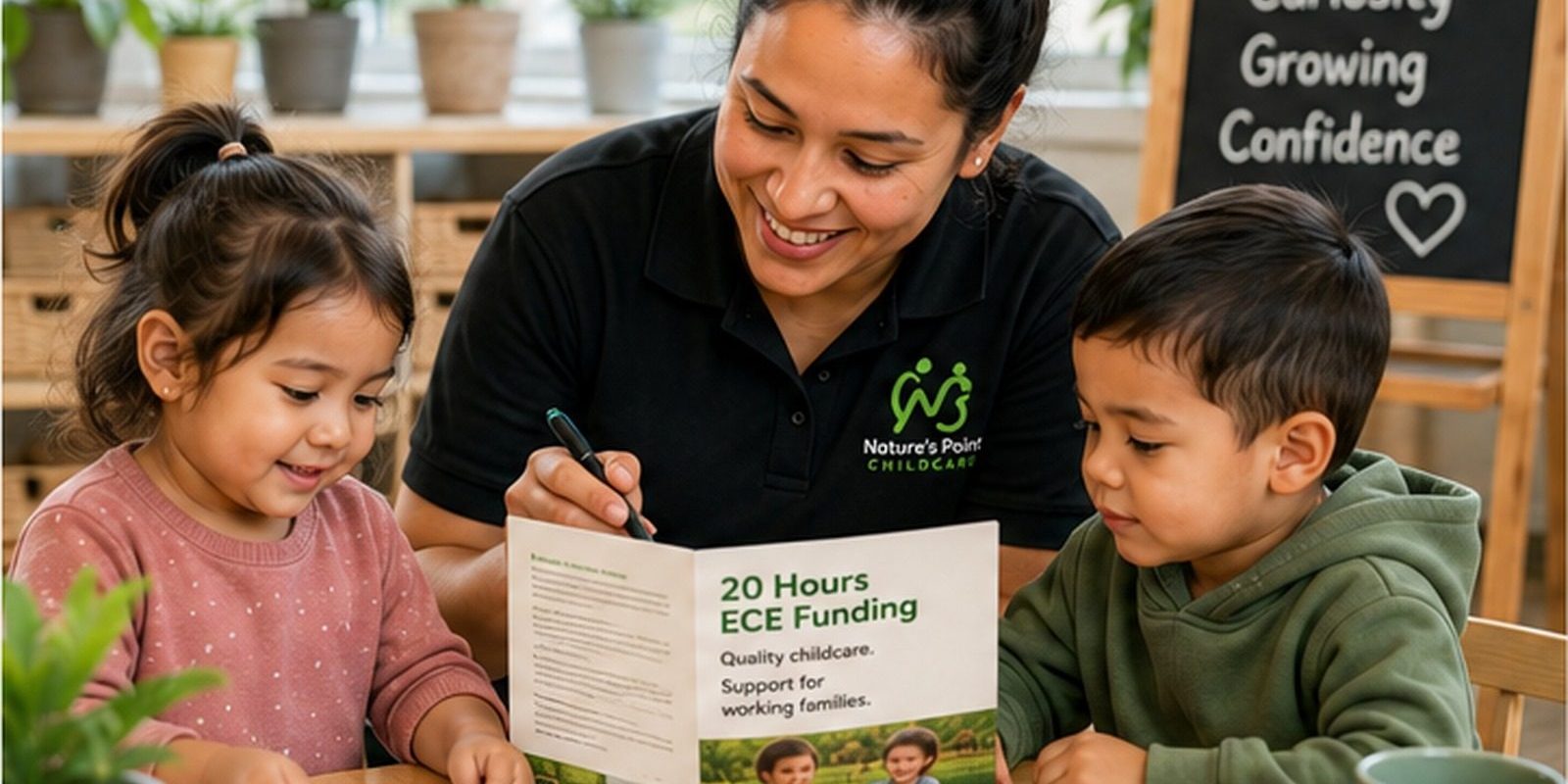
Childcare is one of the bigger costs of raising a family, and the support available can feel like a maze. The good news is there are three main forms of help in New Zealand, and they can often be used together. Here is the plain-English version for Papakura whanau.
20 Hours ECE
If your child is aged 3, 4, or 5, they are eligible for 20 Hours ECE. This funds up to 20 hours of early childhood education a week, capped at 6 hours a day, at participating services. You cannot be charged fees for the hours signed up under the scheme, though centres may still ask for optional charges for extras. Nature’s Point offers 20 Hours ECE, and we are happy to walk you through how it applies to your days.
The Work and Income Childcare Subsidy
The Childcare Subsidy is an income-tested payment from Work and Income, paid directly to your centre so it comes straight off your fees. Depending on your circumstances you may receive support for up to 50 hours a week if you are working, studying, or training, and fewer hours if you are not. It can be combined with 20 Hours ECE for any hours beyond the funded 20. It pays a set hourly rate up to a weekly cap, and the rates adjust each April, so it is worth checking your entitlement with Work and Income.
FamilyBoost
FamilyBoost is a separate payment run by Inland Revenue. It refunds a portion of what you actually pay in early childhood fees, after 20 Hours ECE and any Childcare Subsidy have been applied, up to a quarterly cap. It is income-tested on your household’s quarterly income, and you claim it yourself through myIR using the invoices or statements your centre provides.
How they work together
These three supports can stack. As a simple example, a three-year-old attending more than 20 hours a week might have the first 20 hours covered by 20 Hours ECE, some of the remaining hours reduced by the Childcare Subsidy, and then FamilyBoost refunding a share of whatever you paid out of pocket. The result can be a meaningful reduction in your weekly cost.
A quick note on the numbers
Funding rates and thresholds are reviewed regularly, and the Childcare Subsidy rates change every 1 April, so always confirm the current figures with Work and Income, Inland Revenue, and the Ministry of Education before you budget. Your centre can also help you understand what applies to your family.
Want to know exactly what your weekly cost could look like at Nature’s Point? Get in touch or book a tour and we will happily talk you through it.
Frequently Asked Questions
Who is eligible for 20 Hours ECE in New Zealand?
Children aged 3, 4, and 5 are eligible for 20 Hours ECE at participating services. It funds up to 20 hours a week, capped at 6 hours a day, and you cannot be charged fees for those signed-up hours.
Can you use the Childcare Subsidy and 20 Hours ECE together?
Yes. The income-tested Work and Income Childcare Subsidy can be combined with 20 Hours ECE for any hours beyond the funded 20, and FamilyBoost can apply on top of both.
What is FamilyBoost and how much is it?
FamilyBoost is an Inland Revenue payment that refunds a share of your out-of-pocket early childhood fees, after 20 Hours ECE and any Childcare Subsidy are applied. In 2026 it refunds 40 percent of eligible fees up to $1,560 a quarter, is income-tested, and is claimed through myIR. Rates are reviewed regularly, so confirm the current figures.
Does Nature's Point offer 20 Hours ECE?
Yes. Nature’s Point in Papakura offers 20 Hours ECE and can walk you through how the funding options apply to your family’s days.