



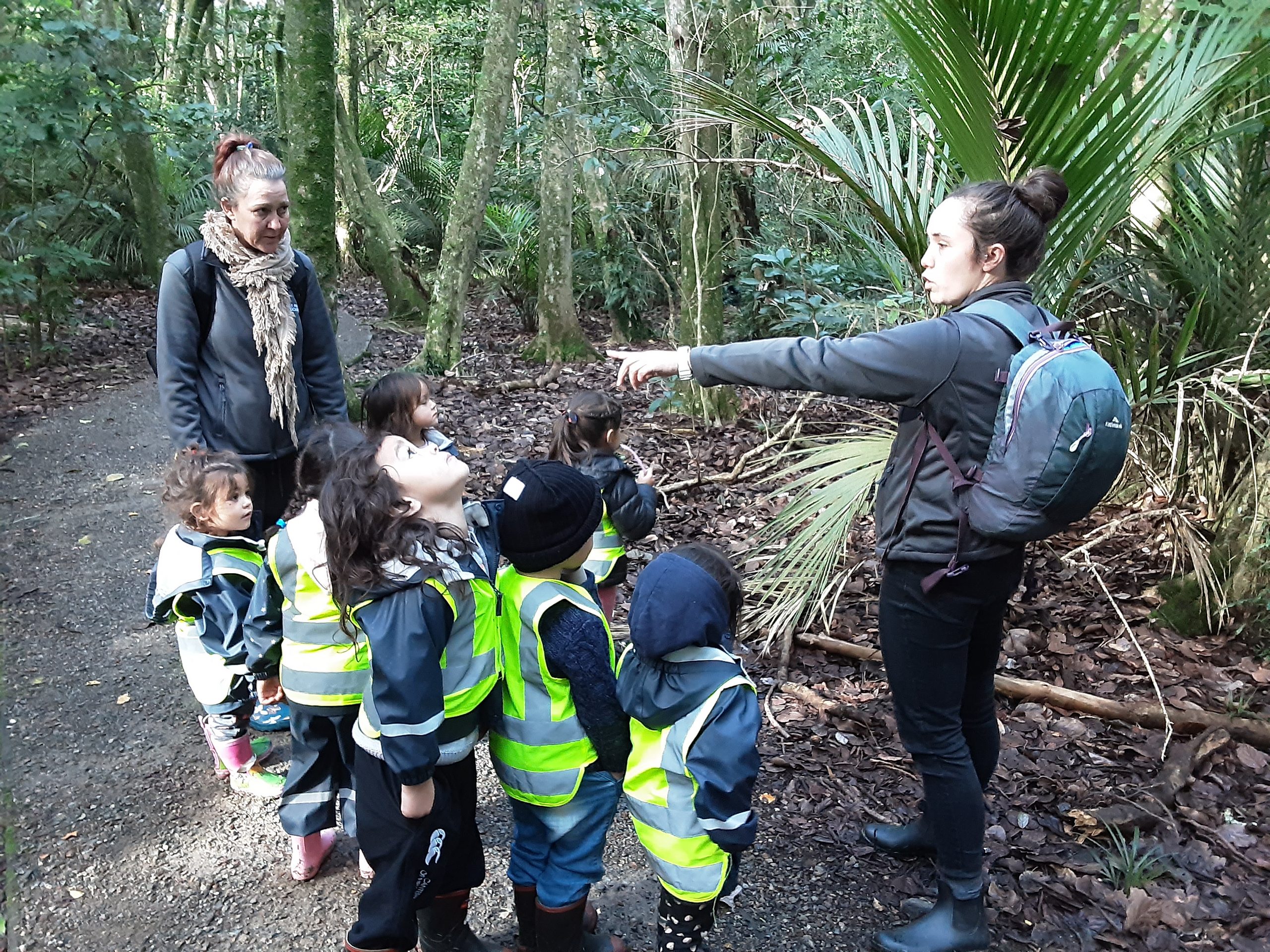
Outdoor play is widely recognised as an important part of healthy early childhood development. Beyond the physical benefits, regular time outside can support children’s wellbeing by helping them settle, manage stress, and build early emotional regulation skills. Emotional regulation develops through relationships, routine, and repeated experiences that help tamariki feel safe and capable — and the outdoors supports this process in a natural, practical way.
For children aged 6 months to 5 years, being outside offers movement, sensory input, and space to explore. These experiences encourage calm focus, problem-solving, and resilience, while also giving children room to express feelings, recover from frustration, and reconnect with others. In this article, we’ll explore how outdoor time supports mental health and emotional regulation in young children, and share simple, realistic ideas Papakura whānau can try at home.
What do we mean by “emotional regulation”?
- Emotional regulation is a child’s growing ability to:
- recognise what they’re feeling
- calm their body when emotions run high
- cope with frustration and disappointment
- express needs in ways others can understand
For under-fives, regulation is not about “being good” or “stopping crying”. It’s about building skills over time, through experiences that help the body and brain feel safe, steady, and capable.
Why the outdoors helps children feel calmer
Movement helps release stress
When children climb, run, dig, push, pull, and carry, they’re doing more than burning energy. Movement supports body awareness and can help children shift from “overwhelmed” to “okay”. Outdoors naturally invites whole-body play that is harder to replicate indoors.
Nature encourages slower rhythms
Outside, the pace often softens. Children can watch clouds, listen to birds, feel the breeze, or focus on small details like a stick, a snail trail, or the sound of water. These moments can create a gentle reset for busy minds.
Sensory play supports regulation
Mud, sand, leaves, water, rocks and bark offer rich sensory input. Sensory play can help children organise their feelings, especially when they’re tired, hungry, or adjusting to change. Many children naturally seek sensory experiences to soothe themselves — digging, pouring, squishing, stirring.
Outdoor spaces make room for big feelings
Indoor spaces can feel crowded when emotions rise. Outdoors, children can spread out, move away from a trigger, or find a quieter corner. That extra space can reduce conflict and give children time to settle.
Outdoor experiences that build emotional regulation
Outdoor play is full of small challenges — and those challenges are where emotional growth happens.
Taking safe risks builds confidence
Climbing up, balancing across, jumping down, or trying again after a slip helps children practise courage and judgement. With kaiako close by, children learn: “I can try”, “I can pause”, “I can ask for help”, and “I can do hard things.”
Frustration tolerance grows through real practice
A bucket tips over. The tunnel collapses. The stick snaps. These small setbacks are perfect learning moments. Children experience disappointment, then try again — building resilience in a way that feels meaningful, not forced.
Social skills develop naturally outside
Outdoor play invites collaboration: building together, negotiating turns, problem-solving, and repairing conflict. Children learn to read others, practise patience, and find solutions — all key parts of emotional regulation.
What this looks like at Nature’s Point (Papakura)
At Nature’s Point, outdoor play is part of our everyday programme — not just when the weather is perfect. You might see tamariki:
- exploring sensory areas such as a mud kitchen, water play, sand, and loose parts
- climbing and balancing to build strength, confidence, and body awareness
- gardening and caring for living things, developing calm focus and responsibility
- going on gentle nature walks and noticing seasonal changes
- settling in quiet outdoor corners for rest, stories, or calmer play
Most importantly, our kaiako support children’s emotional development through co-regulation — the warm, steady presence children borrow before they can manage feelings on their own. That can look like:
- naming feelings: “You look frustrated — that’s hard.”
- offering choices: “Do you want to try again, or take a break?”
- guiding breathing: “Let’s slow our bodies together.”
- helping children problem-solve and reconnect after conflict
We also weave in values that align with Te Ao Māori, such as kaitiakitanga (caring for our environment) and whanaungatanga (relationships and belonging). A phrase we often use with tamariki is “Ka pai — you’ve got this”, celebrating effort and persistence rather than perfection.
Rainy day? Still outside.
Papakura weather can change quickly — and we embrace that. Safe outdoor time in light rain is often exactly what children need to regulate: fresh air, movement, and sensory play.
What to pack (quick list):
- Named gumboots
- Waterproof jacket or raincoat
- Warm layer (fleece/jumper)
- Spare clothes (top, trousers/leggings, socks)
- Small towel or cloth bag for wet items
- Sunhat and sunscreen in warmer months
Outdoor play doesn’t need to be long to be effective. Even 20–30 minutes can help children reset.
6 easy outdoor ideas for Papakura families
- The noticing walk: find 5 things you can see, 4 you can hear, 3 you can feel.
- Puddle rules: make puddle-jumping a ‘yes’ activity with boundaries (gumboots on; deep puddles are ‘look only’).
- Backyard scavenger hunt: find something smooth, something spiky, something tiny, something that smells good.
- Stick-building challenge: build a mini ‘shelter’ using sticks and leaves.
- Garden helper: watering, digging, and planting support focus and calm.
- Leaf breathing: hold a leaf and breathe in slowly, breathe out slowly, watching it move — helpful after big feelings.
FAQs
Is outdoor play safe for younger children?
Yes — with age-appropriate spaces, close supervision, and routines. For under-twos, sensory play and gentle exploration support confidence and calm.
What if my child doesn’t like getting dirty?
That’s okay. We never force messy play. We offer choices, build comfort slowly, and celebrate small steps. Many children grow to enjoy it as they feel safe.
Do children go outside in winter?
Yes, weather permitting and with the right gear. Fresh air and movement are valuable year-round, and we adapt activities to keep children warm and comfortable.
What if my child has frequent meltdowns?
Meltdowns are a normal part of early childhood. Our approach focuses on calm, consistent co-regulation, predictable routines, and helping children build skills over time.
What should I send each day?
A named drink bottle, comfortable clothes for active play, weather gear (coat/hat), and spare clothes. We’ll guide you based on the season and your child’s needs.
If you’re looking for a childcare centre in Papakura that values outdoor play, calm emotional support, and a strong sense of belonging, we’d love to meet you. Come and see how our nature-based programme supports tamariki to build confidence, resilience, and the early skills of emotional regulation — one muddy boot, deep breath, and small victory at a time.
Book a free tour at Nature’s Point and experience our outdoor learning environment for yourself.